
Understanding and Restoring Seagrass
Seagrass
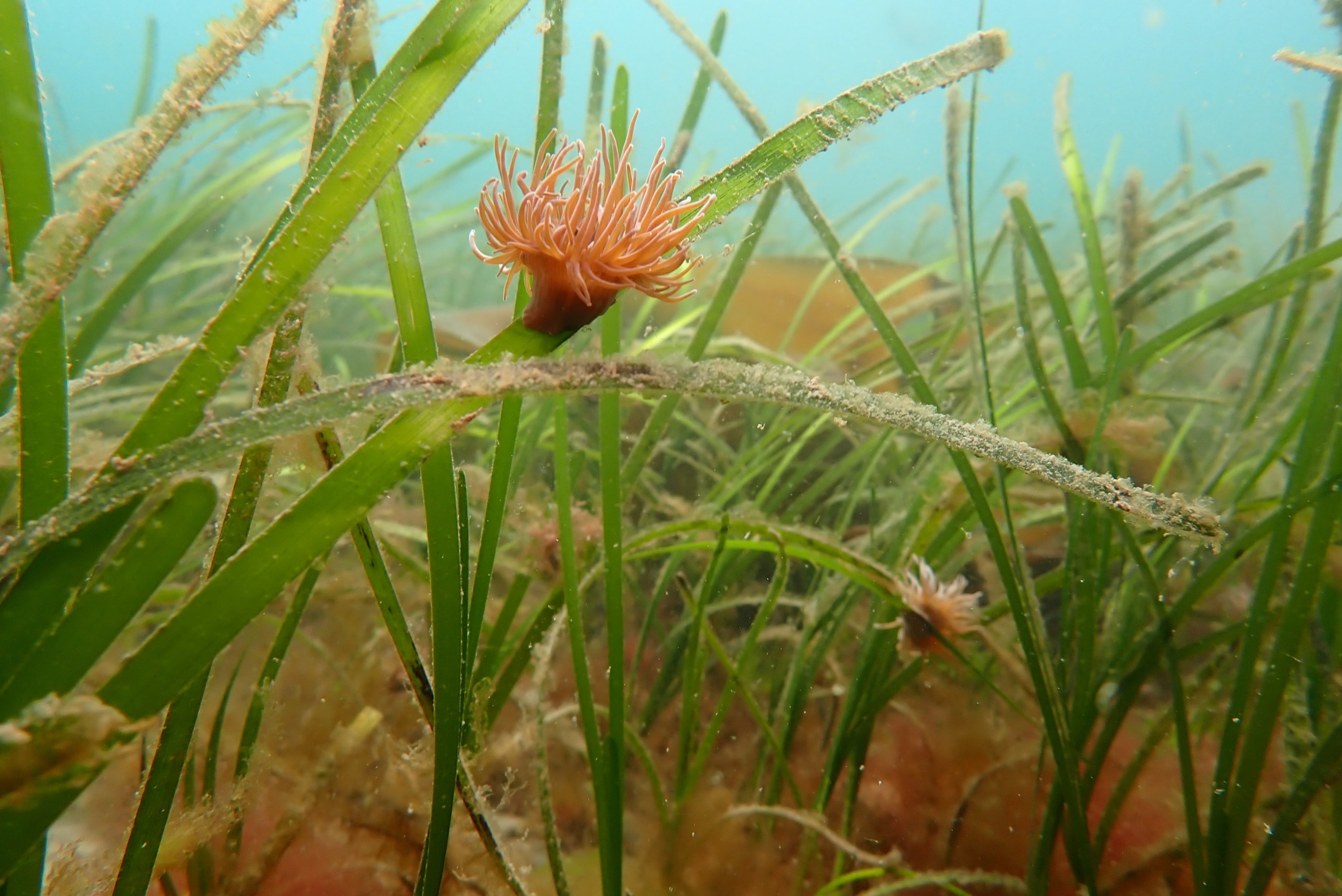
Seagrass bed with snakelock anemone. Photo credit Matt Slater Cornwall Wildlife Trust
Seagrass is a flowering plant that only grows in seawater and thrives as brilliant underwater meadows of green grass. Seagrass meadows are a natural solution to a range of issues: they clean our coastal waters and help to keep our ocean healthy and climate stable. Seagrass also provides a home and nursery for hundreds of species, including commercial fish, helping support the livelihoods of many Cornish residents. Seagrass is critically important for the long-term capture and storage of coastal blue carbon, and globally seagrass stores an estimated 10-18% of all ocean carbon.
Understanding Seagrass
Over recent years, Cornwall Council have commissioned projects to investigate seagrass to understand its true potential to help tackle the climate and ecological emergencies.
Mapping of Mount’s Bay seagrass beds by Cornwall Council uncovered a revelation no one could have predicted. Surveys revealed a new area the size of 290 rugby pitches: it is one of the largest beds ever found in the UK. The bed is larger than all known seagrass beds in Cornwall combined and equates to 3.4% of known seagrass areas within the UK. These findings have reignited interest across Cornwall for the potential discovery of new seagrass beds using echo-sound technology.
A study by the University of Exeter found a total area of 172 rugby pitches of seagrass in the Fal & Helford estuaries: one of the most healthy and productive seagrass beds in the UK - this will aid Cornwall in its ambitions to become carbon neutral by 2030.
While exciting new discoveries are promising, these seagrass beds face many risks, also highlighted by this research. The main risks link to water quality, boating activities and climate change. The authorities in the Fal and Helford are working hard to reduce the pressures on seagrass beds and boat owners can help by following best practice and thinking carefully about where they anchor.
Mor Nature: Cornwall’s Ambitious Marine Restoration Project Has now Launched!
We are utterly delighted to announce that Cornwall continues to be at the forefront of marine nature recovery through ‘Mor Nature’, the county’s first seascape-scale marine restoration initiative.
Backed by a £1.8 million programme, Mor Nature will restore 10 hectares of seagrass meadow in Falmouth Bay and support the recovery of native oyster populations across the Fal and Helford Special Areas of Conservation. Led by the Ocean Conservation Trust and Cornwall Wildlife Trust, the project brings together a wide partnership including Cornwall Council, Falmouth Harbour, the University of Exeter, the Zoological Society of London, the Duchy of Cornwall and local community organisations.
The project will contribute to national targets for nature recovery while improving the resilience of Cornwall’s marine environment in the face of climate change. Mor Nature also aims to reconnect local communities with the sea through citizen science, educational activities and volunteering opportunities, helping people play an active role in marine conservation.
By restoring interconnected habitats and supporting species ranging from seahorses to commercially important fish, Mor Nature demonstrates how collaborative action can deliver lasting benefits for wildlife, coastal communities and Cornwall’s natural environment.
For more information on the Project, please follow Ocean Conservation Trust here; Mor Nature - Ocean Conservation Trust
Or you can watch the 2025 webinar hosted by Cornwall Council, below, which gives you more information about the seagrass restoration within the Mor Nature programme.
Watch back the webinar now
Seagrass in the Fal
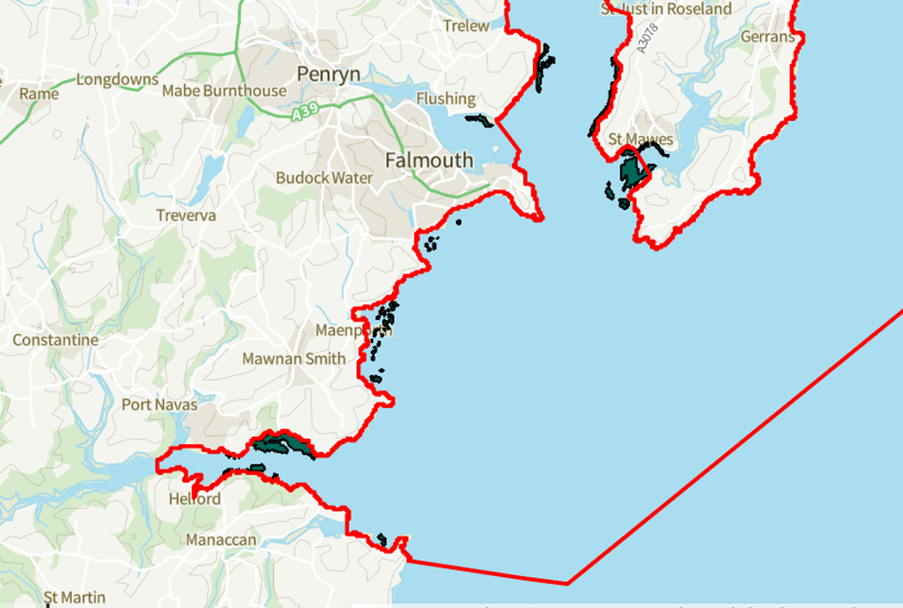
Within the SAC, there are around 100 hectares – or approximately 1.1km2 – of Zostera marina, also known as common eelgrass. While much of this remains intact, some areas are degraded and require active restoration to reach their full potential.

