Ross Swing Bridge refurbishment, Penzance
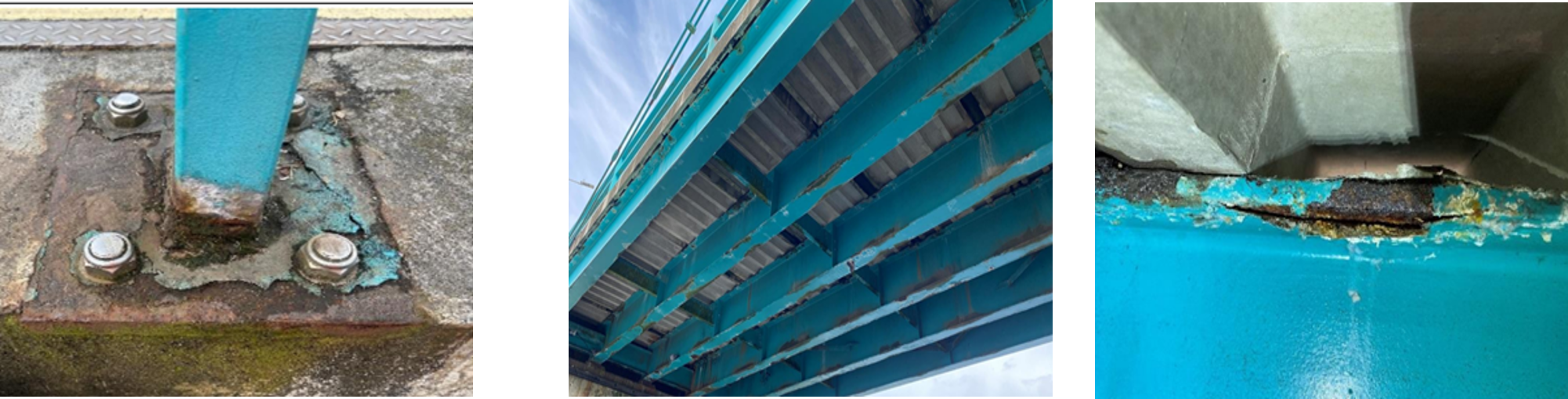
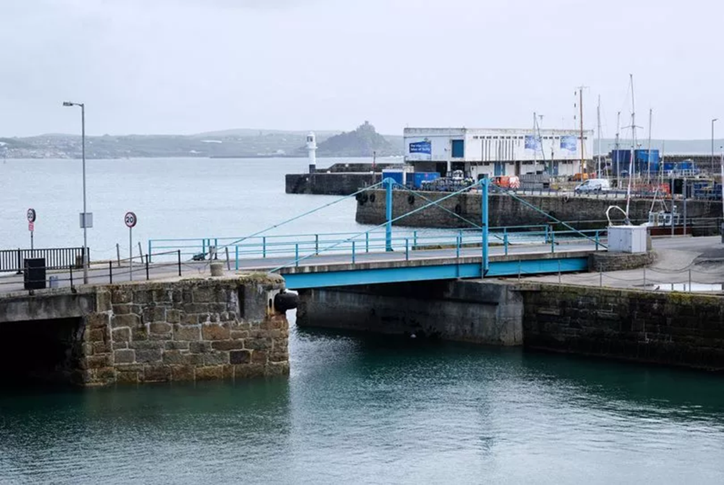 In September 2024 a Principal Inspection of the bridge was carried out, which revealed that areas of the steel-work required repair and repainting. Although some areas were in better condition than others, it was determined that the entire steel-work on the structure must be refurbished.
The bridge will be dismantled and the existing concrete deck removed for recycling. The steel-work structure will be lifted on to a barge using a crane, then transported by sea to a dry dock facility at Falmouth, for specialist refurbishment. This will include inspection and maintenance of the hydraulic mechanisms which are used to shift lift and rotate the bridge in and out of position, shot blasting, refurbishment and repainting of the steel structure, masts, and stays, and new steel parapets and a new footway will be fabricated. The structure will then be transported back to Penzance, to be assembled and lifted back in to place, before resurfacing and the reinstatement of the pedestrian footway.
| Keeping Penzance Moving - Road Closures Whilst the refurbishment is underway, a temporary bridge will be installed, providing a single lane for vehicles (managed by traffic lights) with pedestrian access. However, road closures will be required for both the initial and final 3-4 week periods, to allow the bridge to be removed and the temporary one assembled, then vice versa. Short-term closures will also be needed periodically during the program, to enable the temporary bridge to be lifted, so that boats can access the dry dock. Advanced warning signs will be in place ahead of each closure, together with a fully signposted diversion route (highlighted here in green). PLEASE NOTE: Due to the risk of increased volume of traffic causing damage, Abbey Slip has now been closed to traffic and will remain so for the duration of the Ross Bridge road closure. The Dry Dock and other nearby businesses remain open as usual, throughout the project. | 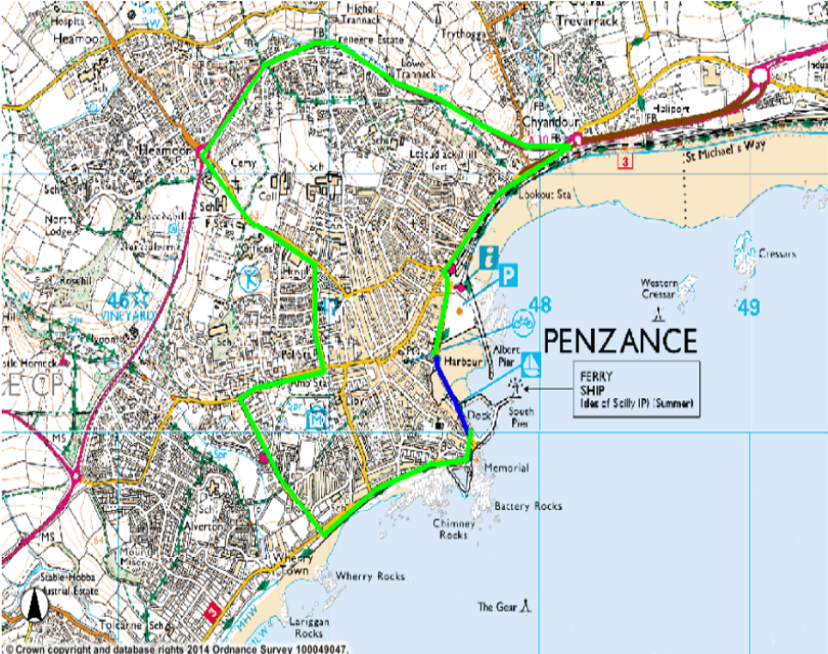 |
Regular updates will be available on this page throughout the project.
If you have any queries or concerns please email: contracting@cormacltd.co.uk
or call us on 0300 1234 222
-
29th April 2026
Share 29th April 2026 on Facebook Share 29th April 2026 on X (formerly Twitter) Share 29th April 2026 on Linkedin Email 29th April 2026 linkYesterday marked a major milestone for the Ross Bridge project, as the bridge was successfully lifted back into place. The complex operation went smoothly and it’s great to see the structure back where it belongs. While this is a significant step forward, the road is not yet open as the there is still a considerable amount of work to complete. However we hope to be able to confirm whether pedestrian access will be open for the Bank Holiday weekend shortly. We’ll share a further update here, as soon as we're able to.
-
2nd April 2026
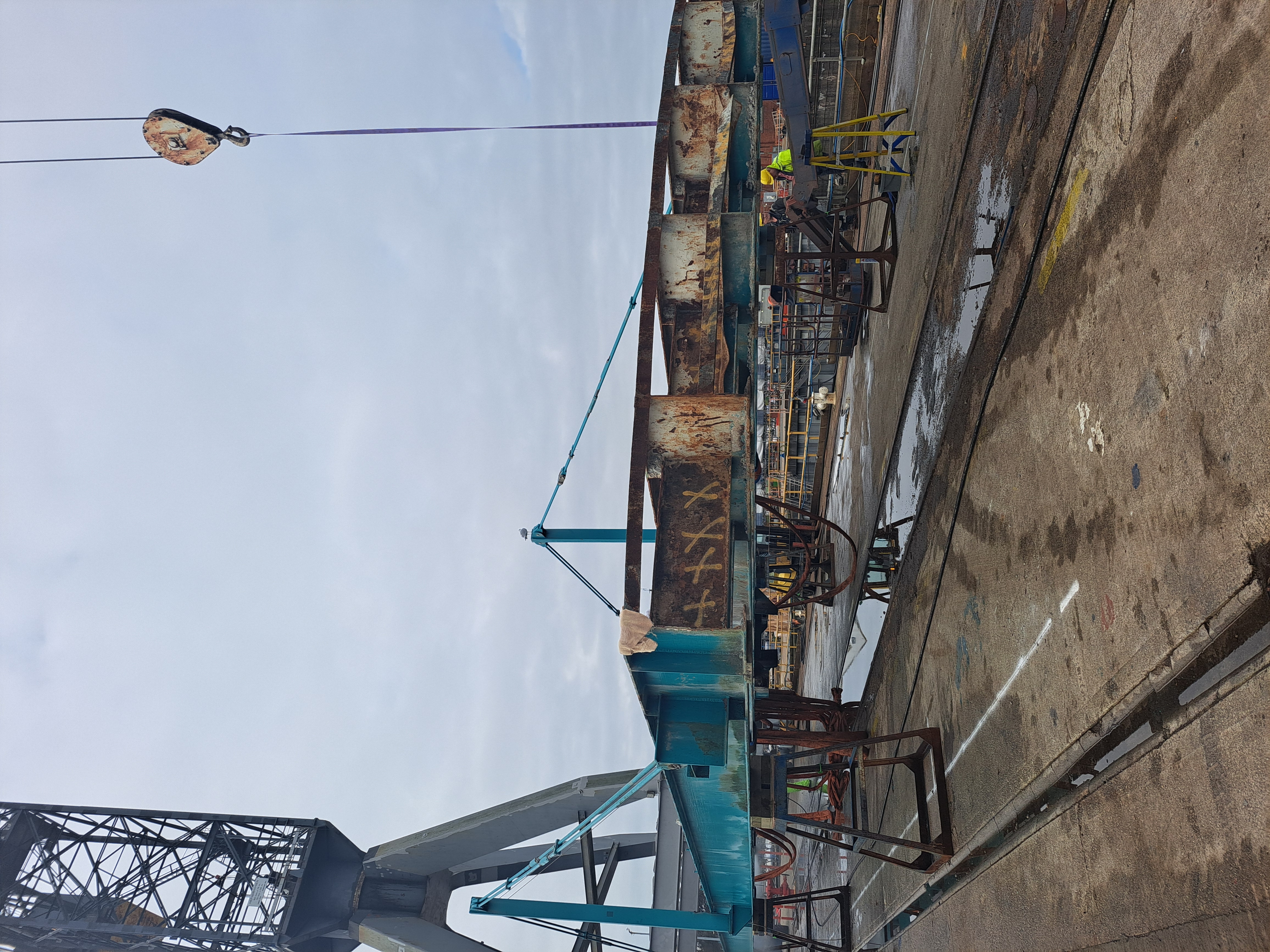
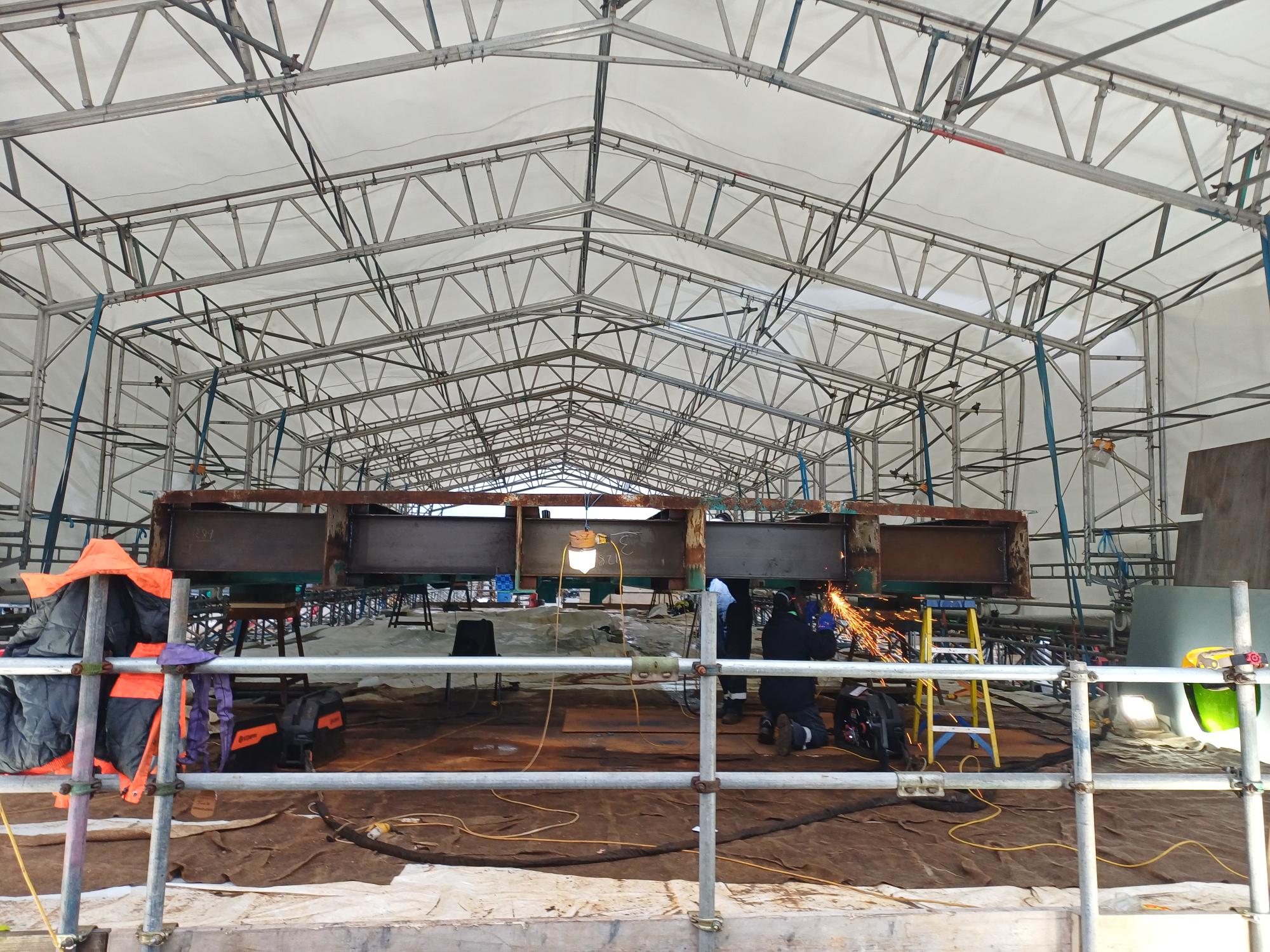
Share 2nd April 2026 on Facebook Share 2nd April 2026 on X (formerly Twitter) Share 2nd April 2026 on Linkedin Email 2nd April 2026 linkThe refurbishment of Ross Bridge itself is progressing very well, with significant activity underway at A&P Falmouth’s specialist facility, where they are working seven days a week to accelerate the program.
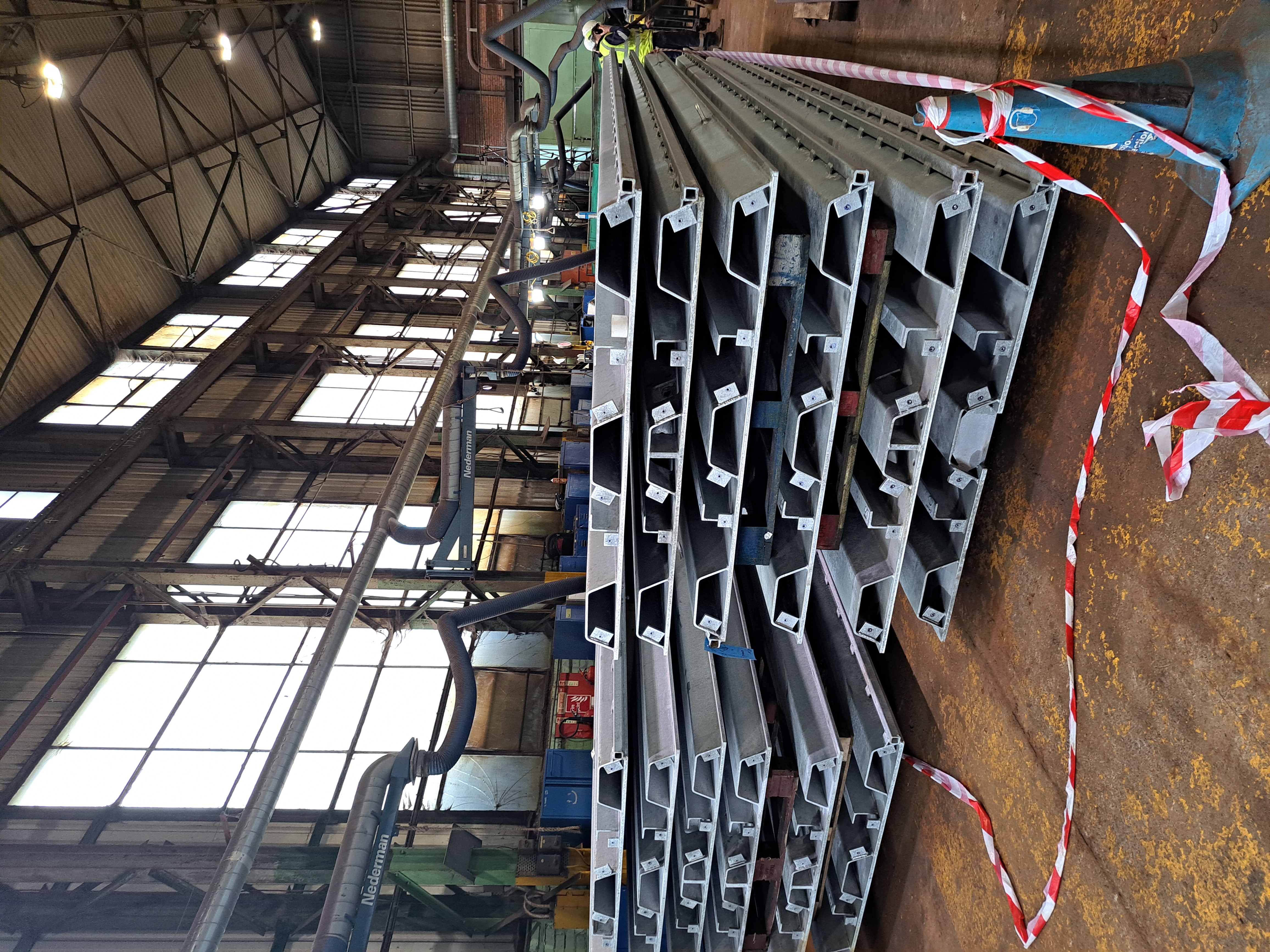
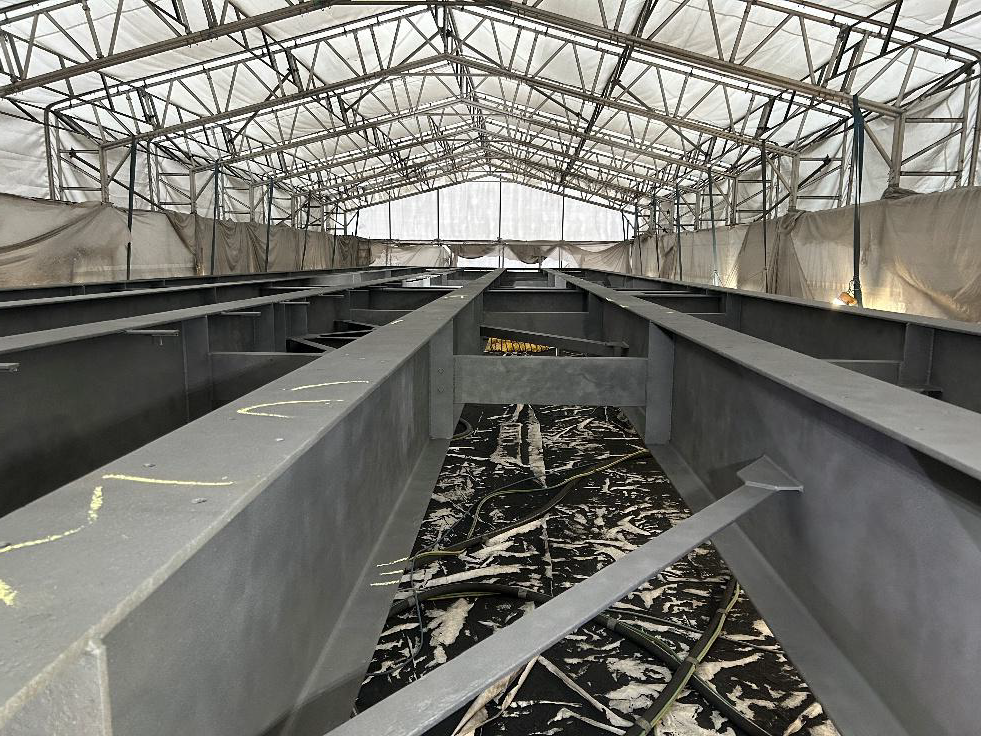
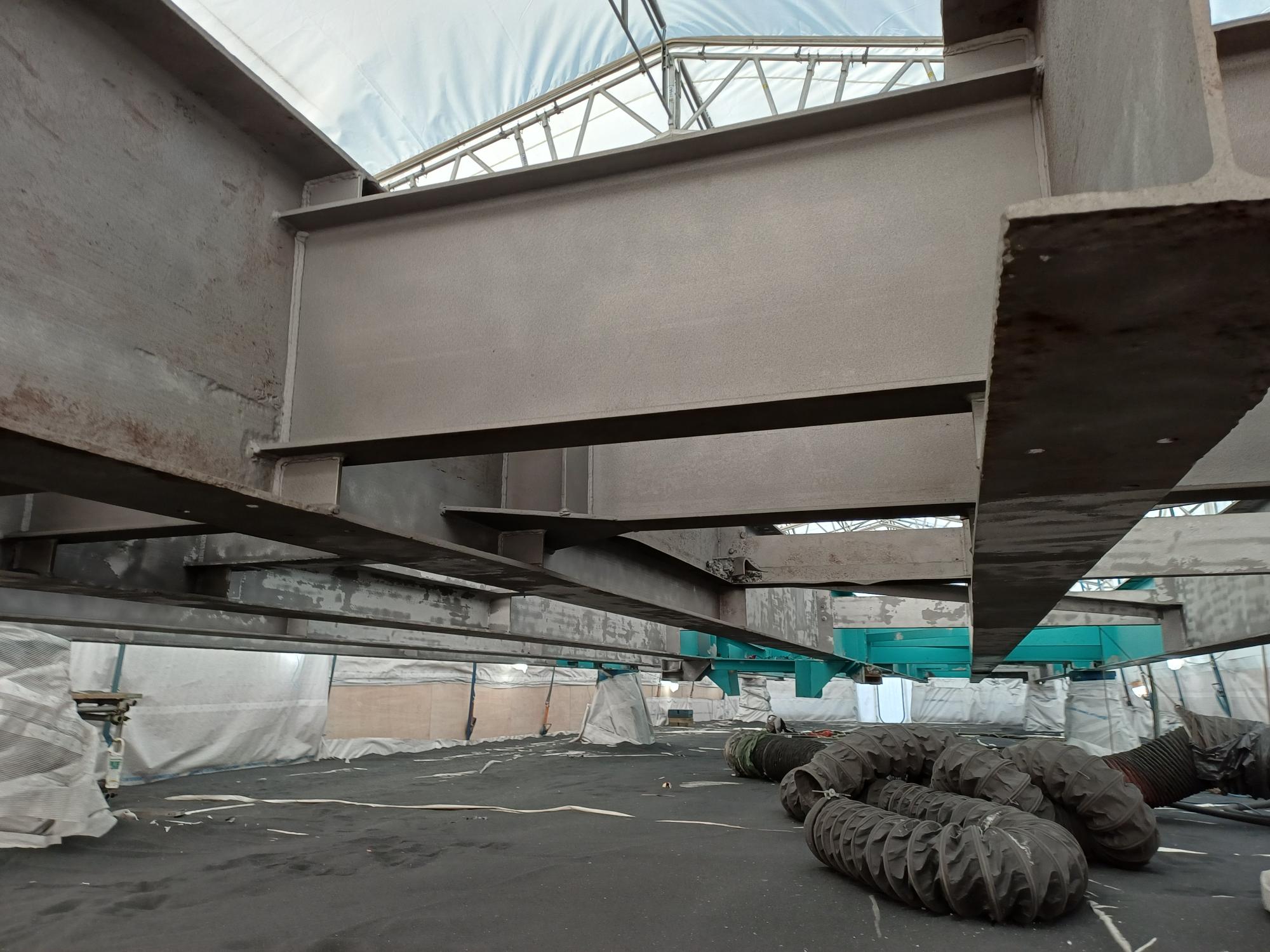
The full bridge structure has been shot‑blasted back to bare metal, enabling thorough inspection and specialist structural repairs to be carried out, which are now complete. A primer coat is currently being applied across the structure, in readiness for the full painting, scheduled to take place over the Bank Holiday weekend, providing long‑term protection suitable for marine conditions. Jacking cylinders and other hydraulic elements—essential for the bridge’s operational mechanisms—are also currently undergoing refurbishment and repainting. And footway sections, kerbs and handrails have been sent for galvanising, together with handrails, preparing them for installation.
The steel deck plates have already been fully fabricated and galvanised and, following the completion of repainting next weekend, a trial fitting will take place whereby engineers will refine alignment and carry out the drilling of holes for bolts to ensure accuracy. Thereafter, the plates will be removed and prepared for transportation by road. Because the combined weight of the deck plates and the bridge exceeds the crane capacity, they cannot be installed before transport. They must be fitted once the bridge is back on site and lifted into place.
The refurbishment remains on programme, and the pace of work positive. The attention to detail, the quality of the engineering, and the commitment shown by the A&P team all reflect the importance of this bridge to Penzance – and once complete the project will safeguard Ross Bridge for many decades to come.
We will continue to keep everyone updated as the programme moves into the next stages and the installation window becomes more clearer.
-
13th March 2026
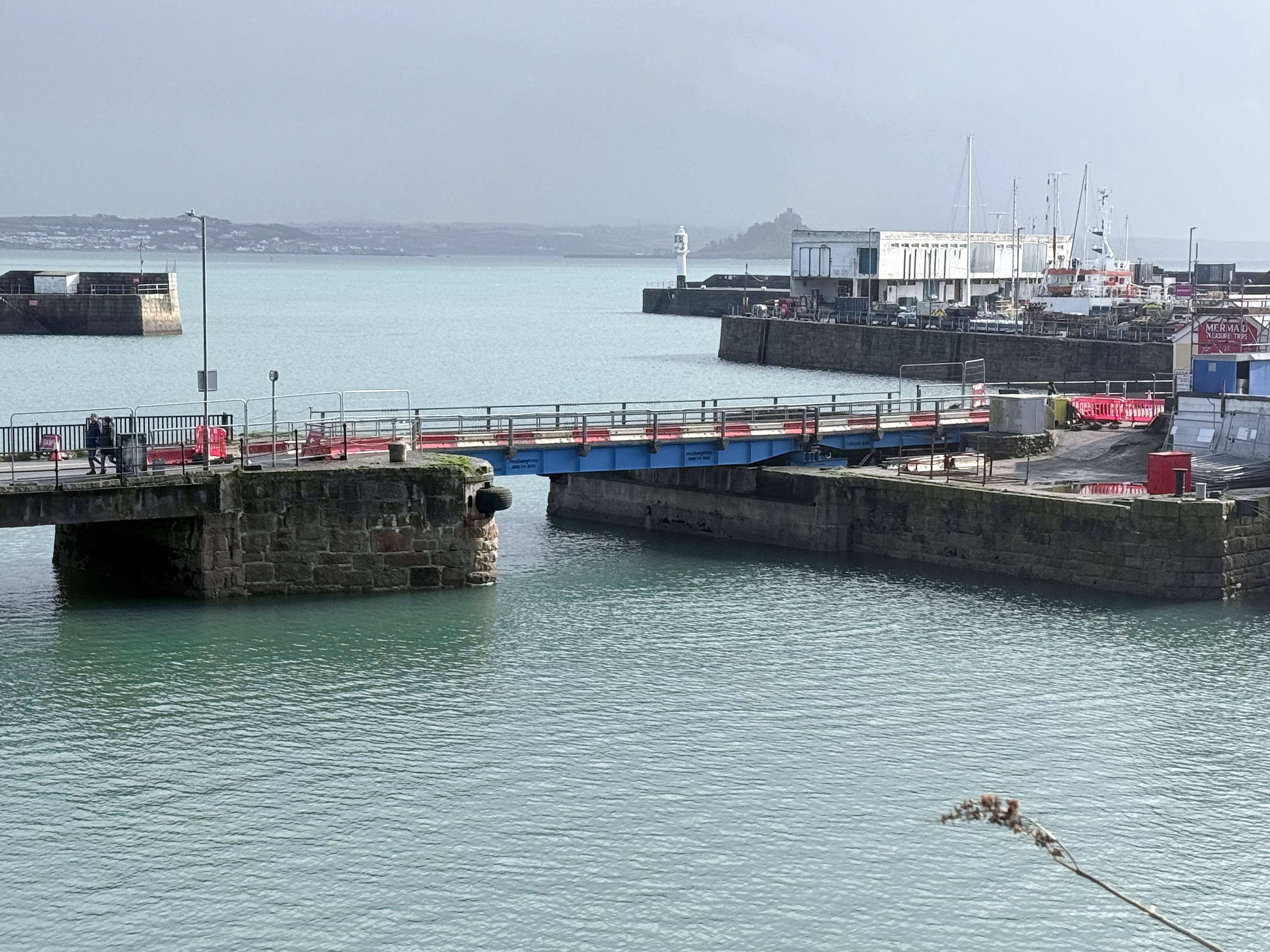
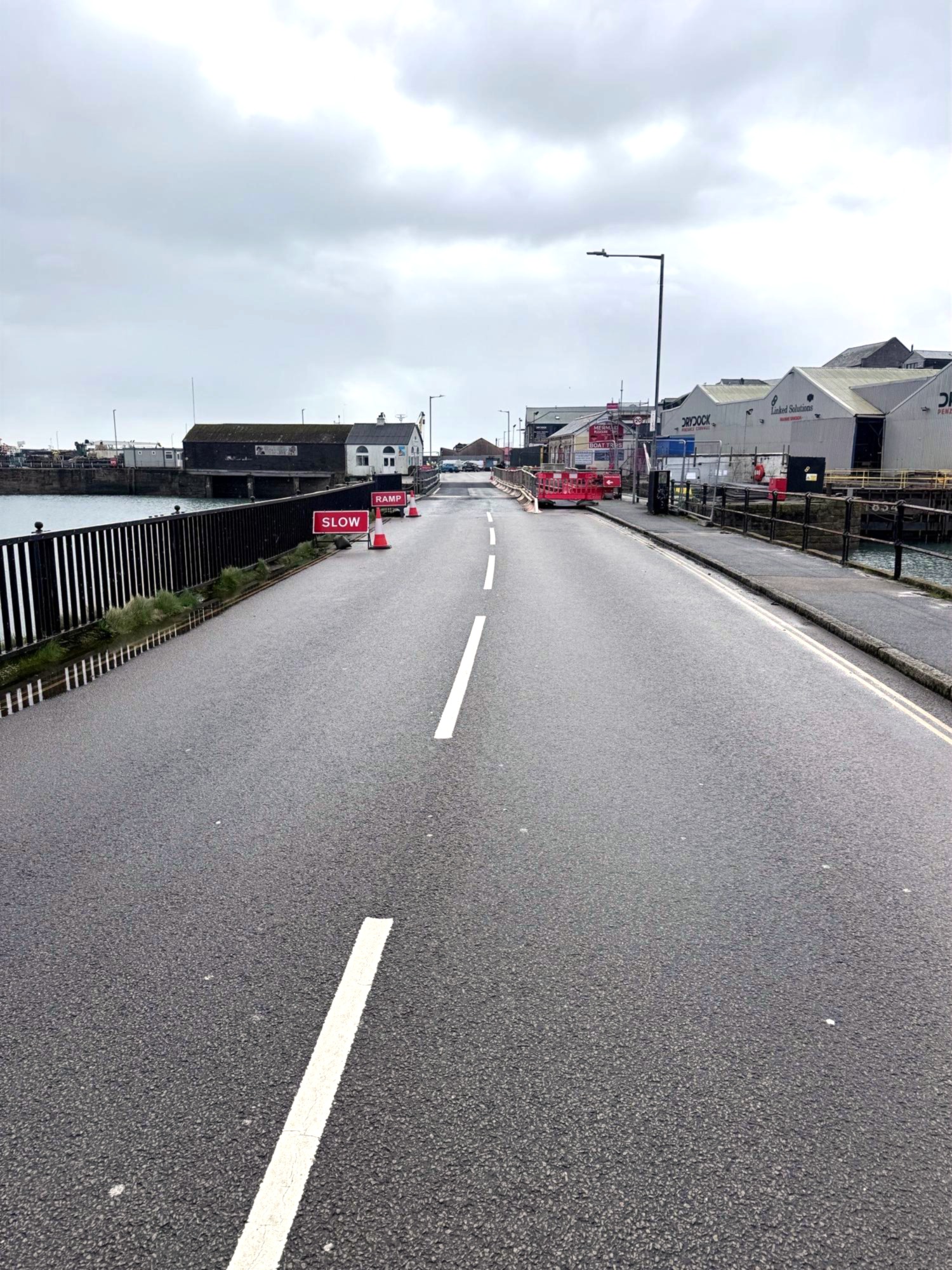
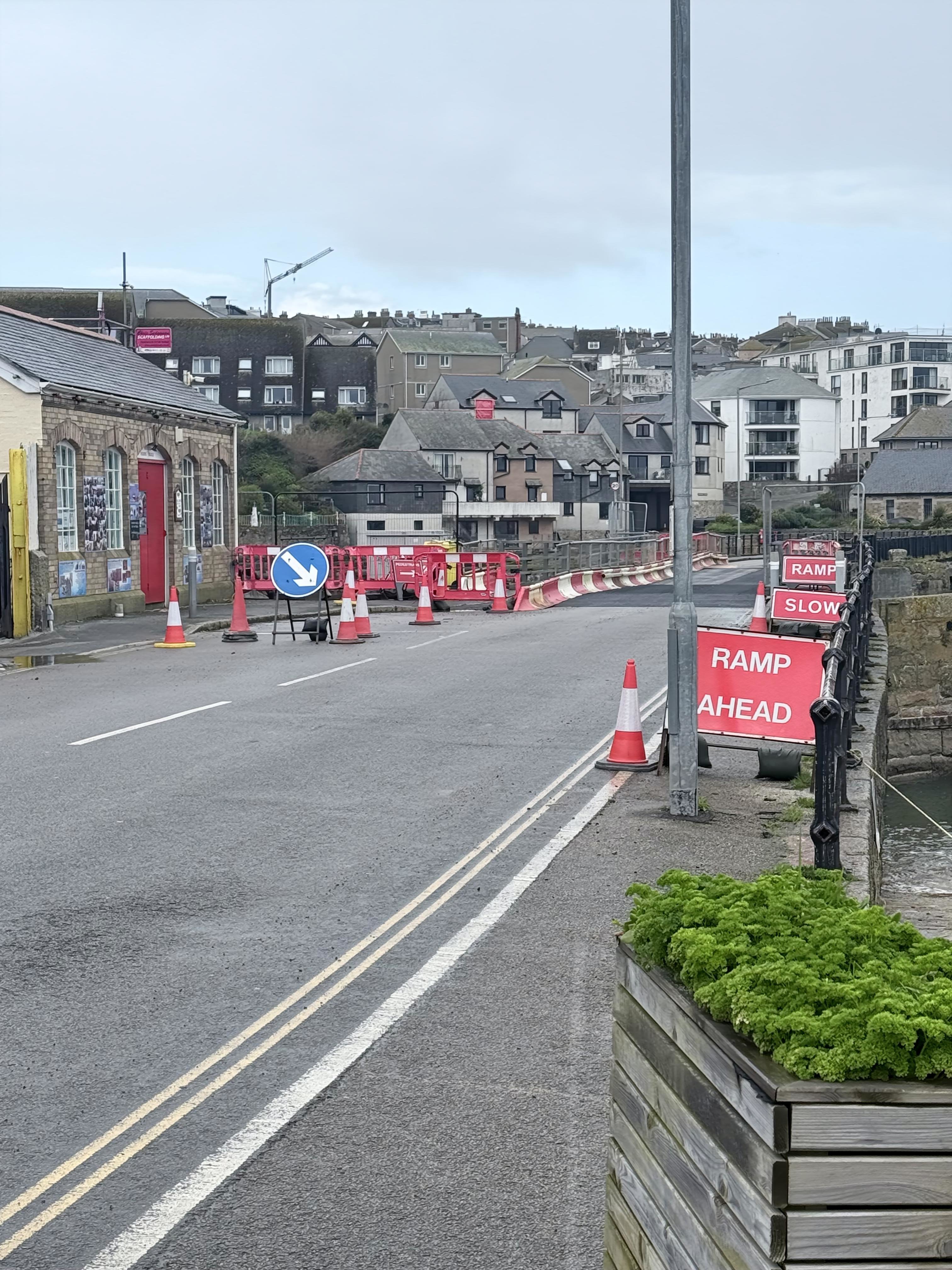
Share 13th March 2026 on Facebook Share 13th March 2026 on X (formerly Twitter) Share 13th March 2026 on Linkedin Email 13th March 2026 linkThe temporary structure at Ross Bridge is now fully installed and the road has reopened to both vehicles and pedestrians. To manage traffic flow safely, two‑way traffic lights are in operation which will be manually controlled during weekday, peak times and automated during evenings and weekends.
Meanwhile, inspections of the main bridge structure itself are now underway in Falmouth and the refurbishment programme has begun. New steel deck plates have already been fabricated and are ready for installation when the structure returns to site.
The temporary bridge will remain in place until after the Easter weekend and we’ll continue to keep you updated as the refurbishment progresses, sharing further information on the programme and timetable in due course.
-
Ross Bridge lift successfully completed
Share Ross Bridge lift successfully completed on Facebook Share Ross Bridge lift successfully completed on X (formerly Twitter) Share Ross Bridge lift successfully completed on Linkedin Email Ross Bridge lift successfully completed link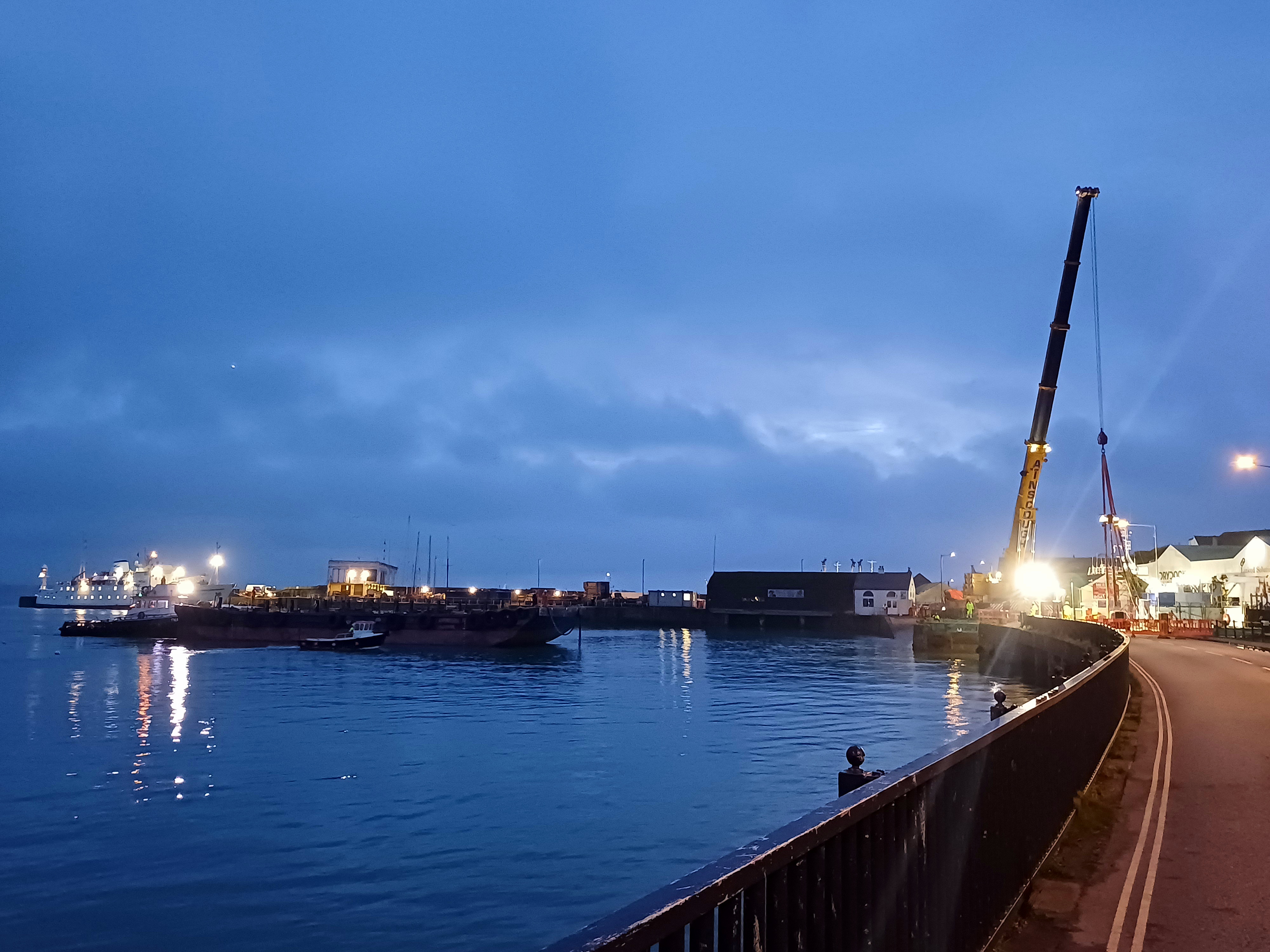
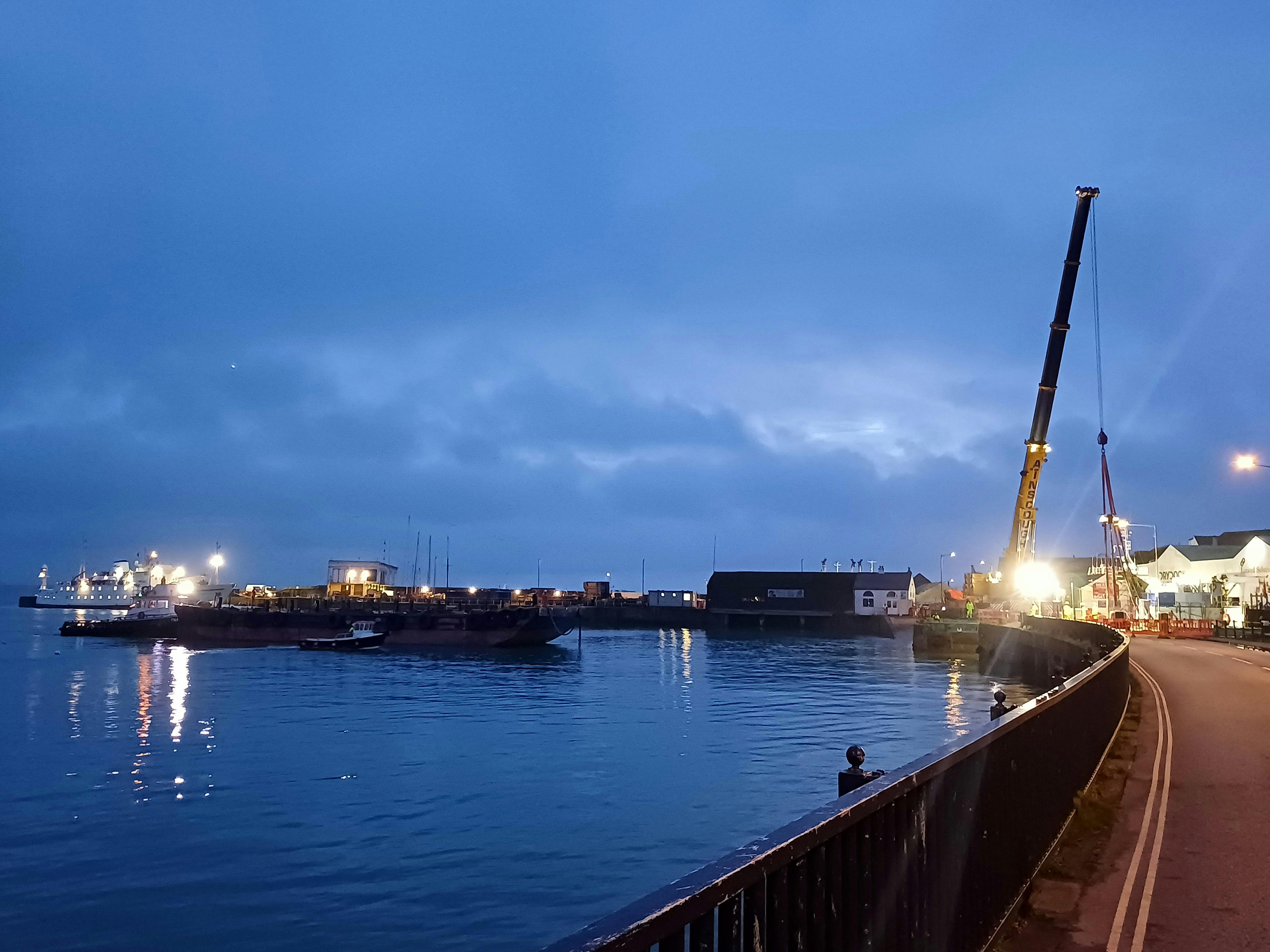
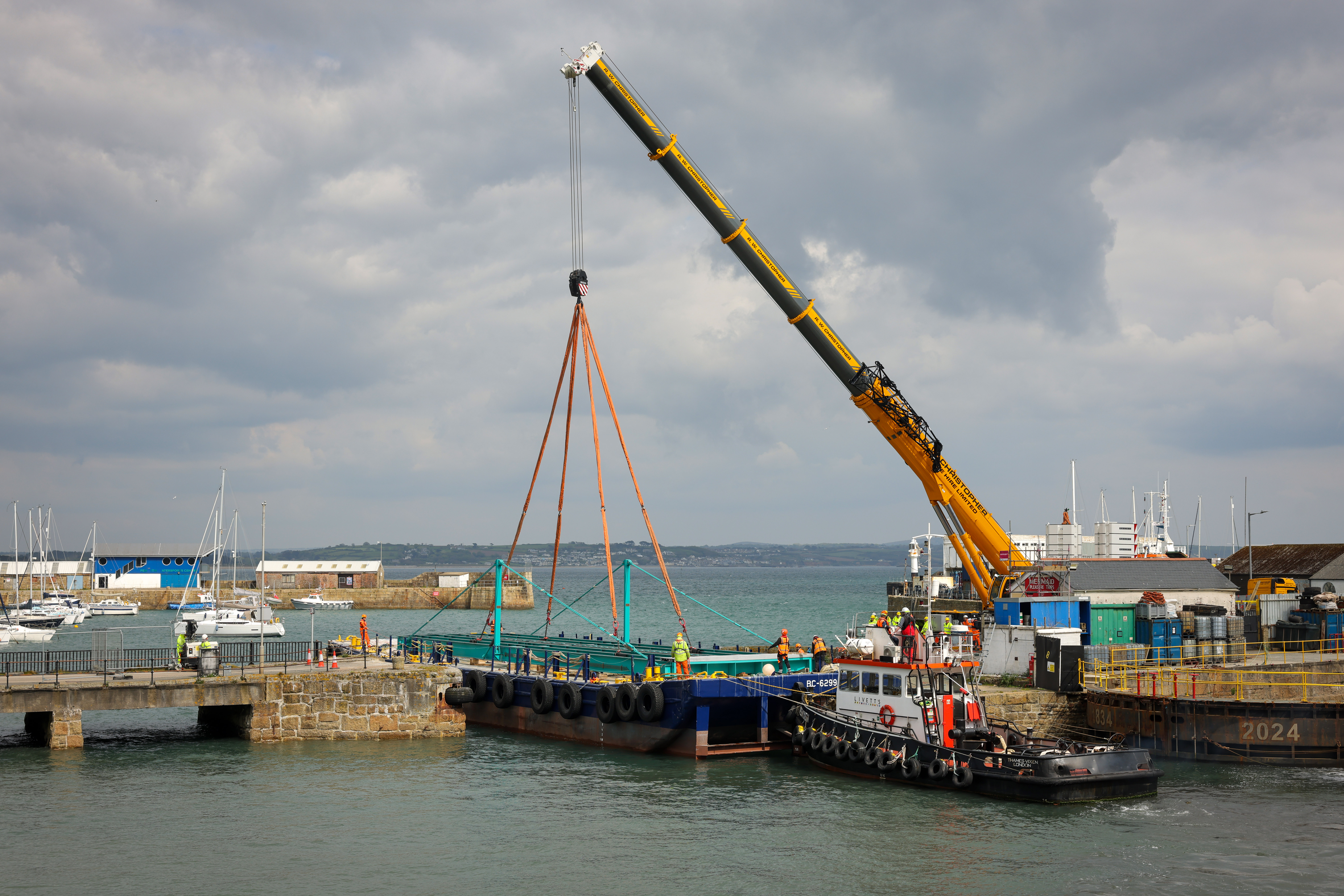
The Ross Bridge lift has now been successfully carried out. Cormac have been closely monitoring the weather and sea conditions, waiting for a safe and suitable window to carry out this highly technical operation. Based on the forecasts, that window arrived early this morning, allowing the lift to be scheduled.
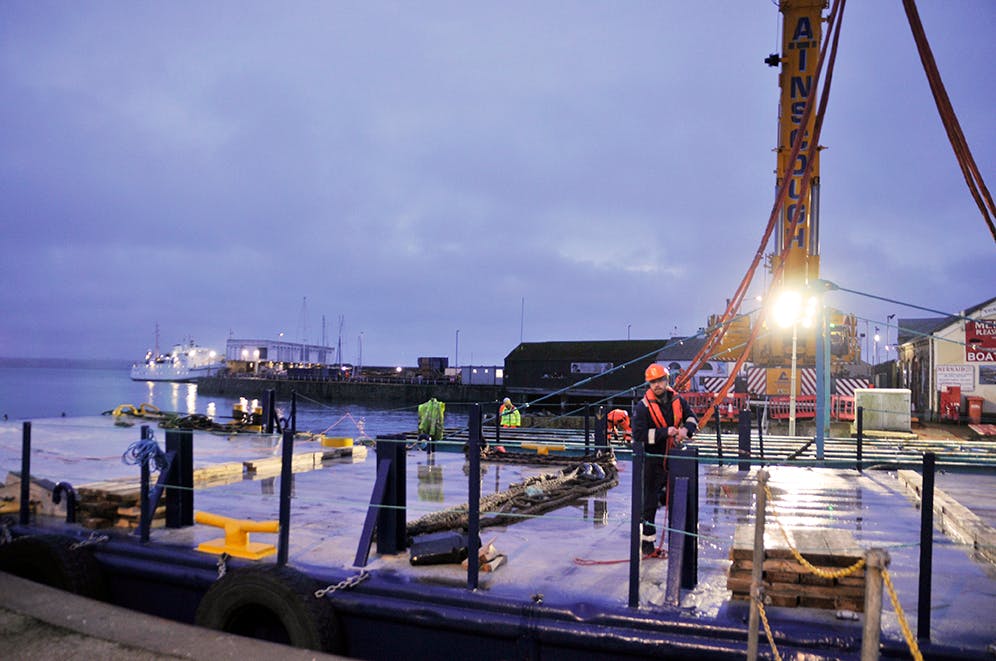
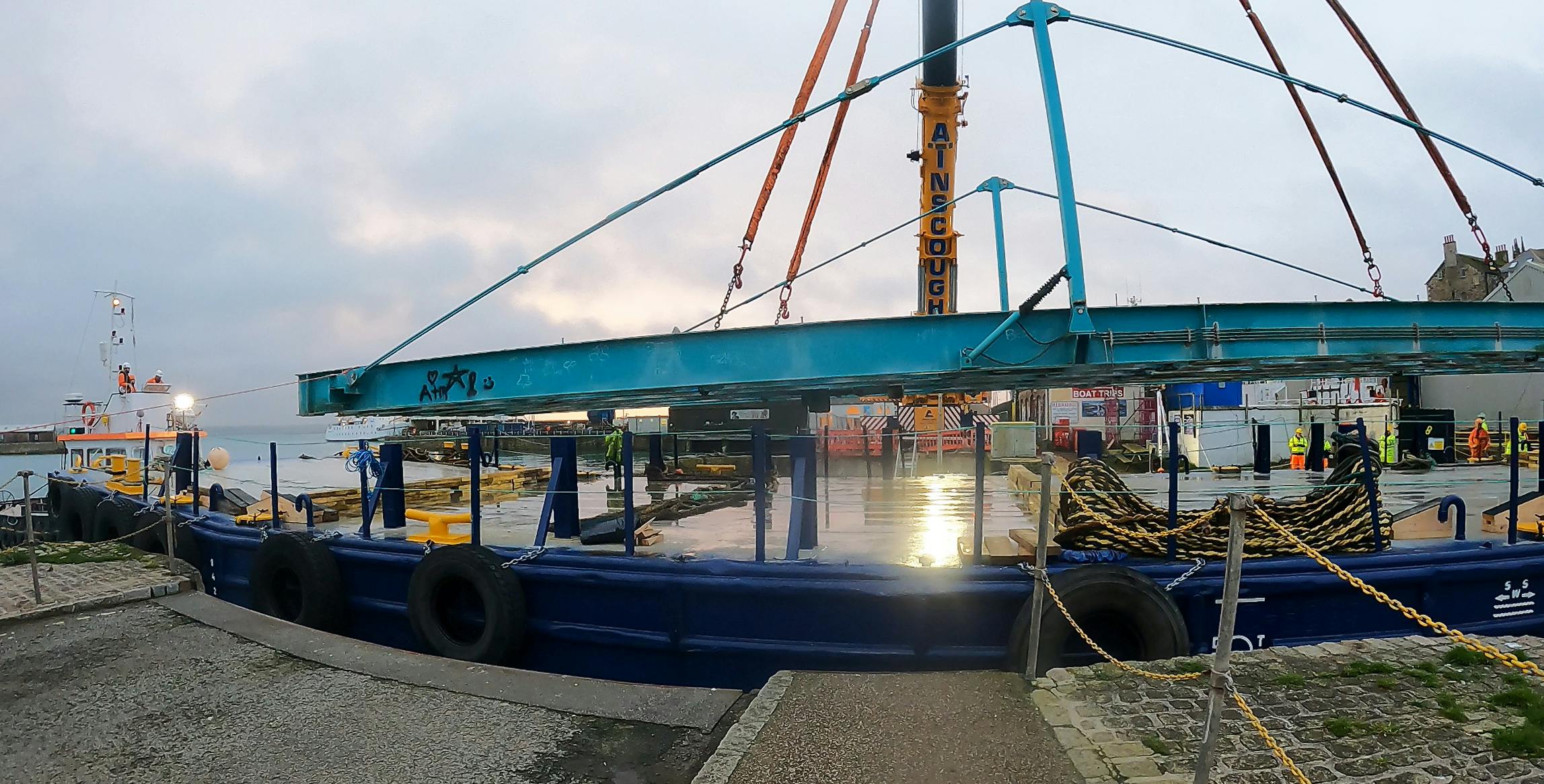
At 6am this morning, the tug Vixen skilfully manoeuvred the 40‑metre barge into the channel between the dry dock and causeway, positioning it with precision. Already in place on the sea wall was the 650‑tonne crane — one of only four of its type in the country, ready to be attached to the 26‑tonne bridge. Using specialised lifting rigging, evenly distributed to balance the load, the bridge was connected using pre‑rigged lifting points and straps, and the crane then stabilised with a 90 tonne counterweight to balance it.
The bridge was then slowly raised, lifted over the sides of the barge, lowered into position, and secured for transport. At the same time, the sea wall was being continuously monitored for any potential signs of movement, caused by the combined weight of the crane, bridge and lifting gear.
By 8am, Ross Bridge was being towed around to the harbour basin, where it now awaits its onward journey to A&P Falmouth later this week. This next phase will take place once sea conditions around Lizard Point are confirmed to be safe and suitable.
The temporary bridge is scheduled to be installed (also by crane) at the next available weather window.
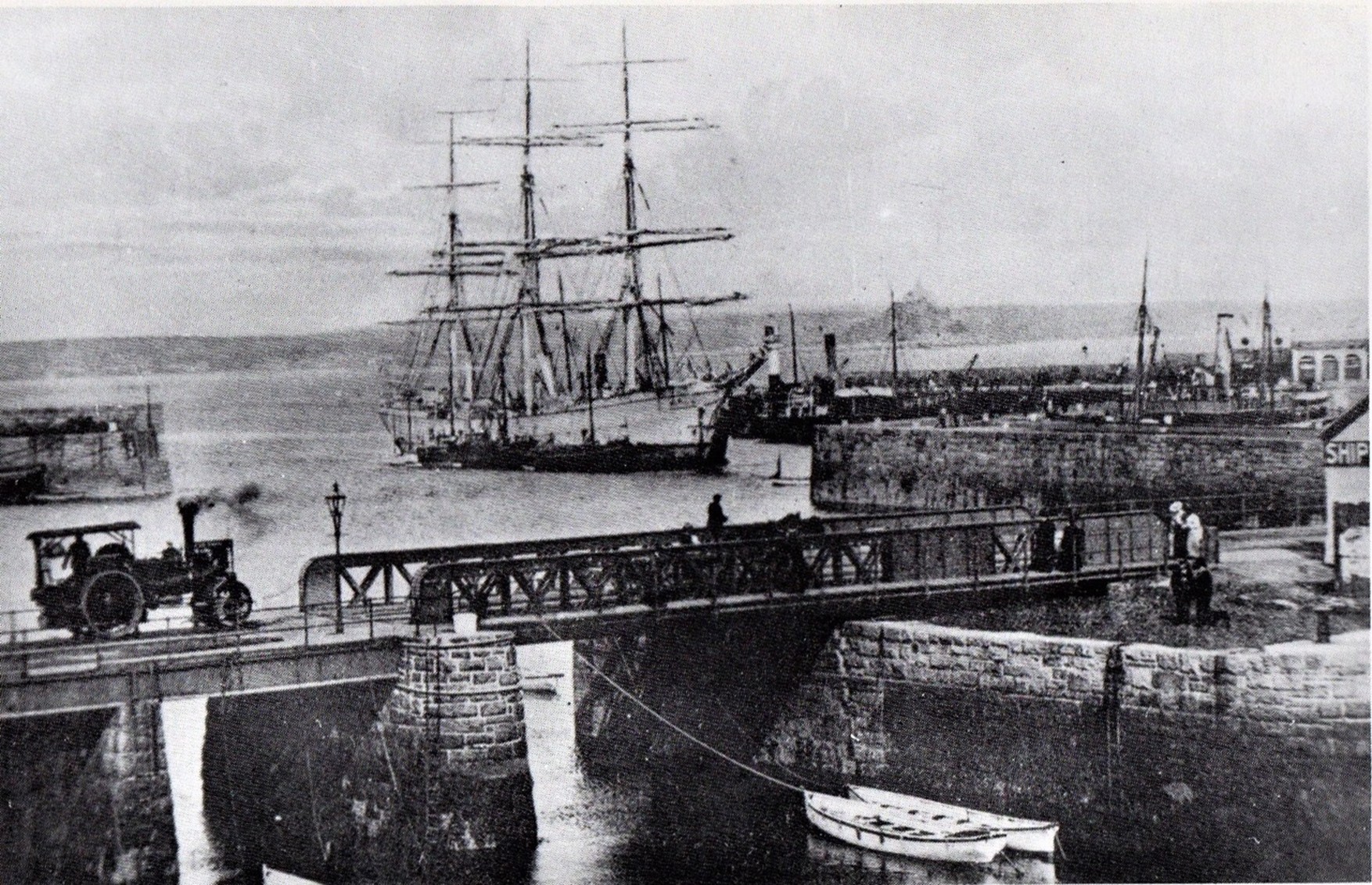
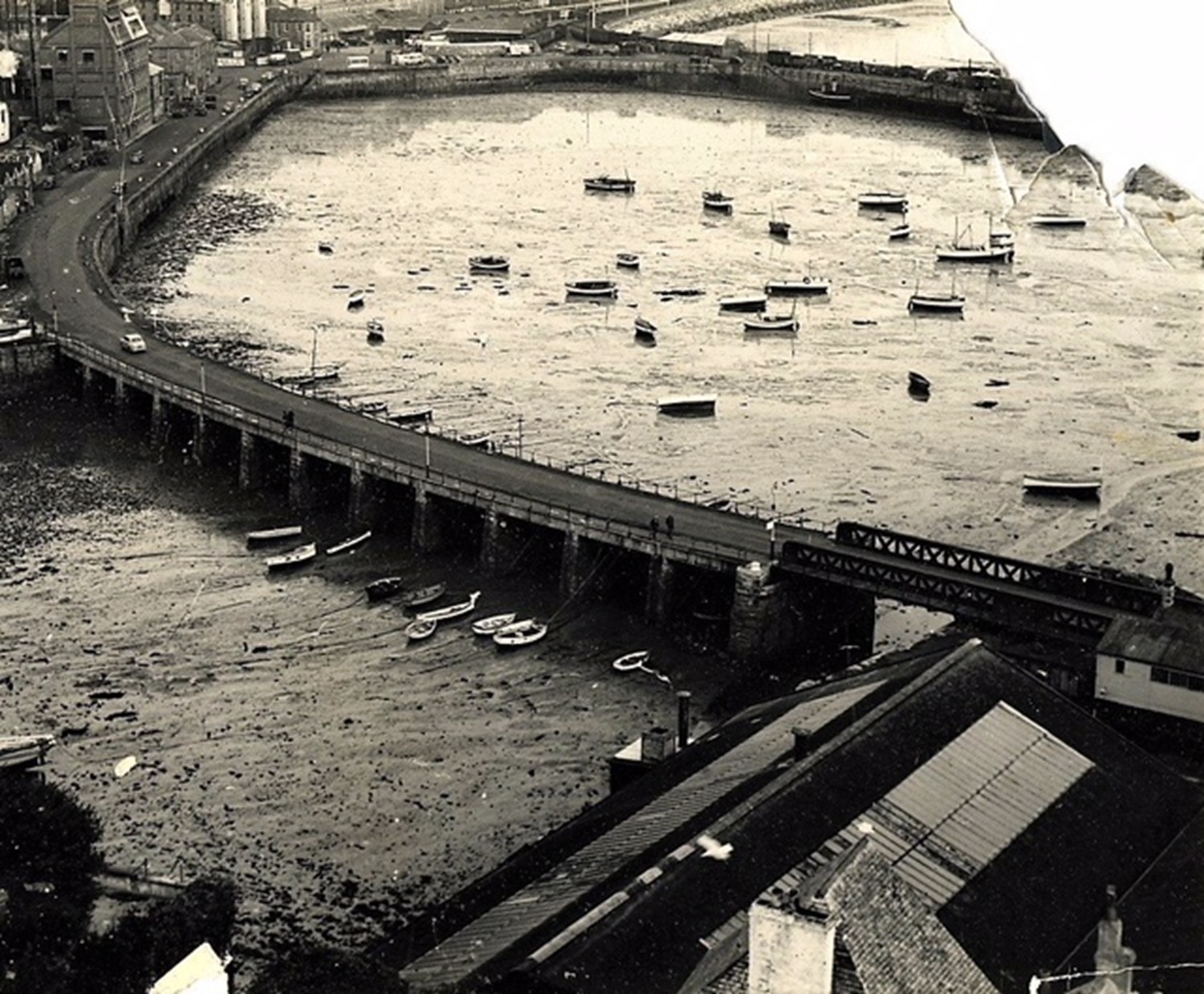
Ross Swing Bridge connects Penzance town centre to the harbour area. Constructed in the early 20th century from an old railway turntable. it's primary function was to allow road traffic and pedestrians to cross the inner harbour, whilst enabling boats and small vessels to pass through when swung open.
In 1980 it replaced with a newer structure and is currently used by the public and to allow boats access to the dry dock and inner basin. Today the bridge remains a functional heritage structure and is still used for harbour operations as well as being a vital link fro traffic and pedestrians.
The bridge is exposed to harsh marine conditions, which cause corrosion and mechanical wear over time. A regular inspection and maintenance program is in place to keep it safe and operational, ensuring it serves the harbour for generations to come.