
From Chemistry to the Coast: Understanding Climate Change Locally
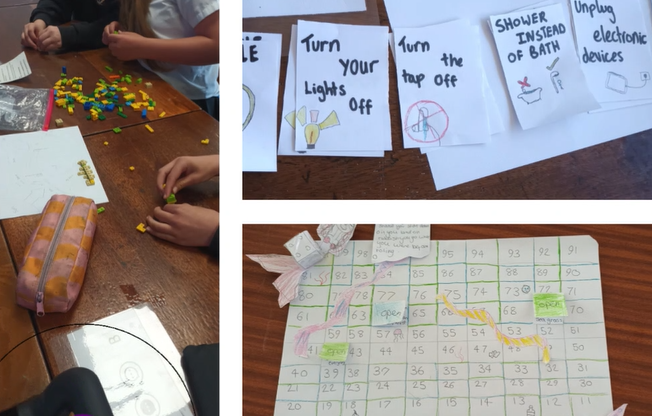 Activities at Treviglas
This week pupils at Treviglas School took part in a session about chemistry, climate change and the oceans. The lesson started with simple questions and short quizzes. Pupils talked about how Earth’s climate has changed over time. They watched short videos to learn what greenhouse gases are. Pupils learned how human actions have increased carbon dioxide in the air.
The lesson then focused on the oceans. Pupils learned how warmer seas, rising sea levels, and ocean acidification affect marine life. They explored examples from Cornwall and Devon. This included changes in local fish species and fewer sightings of basking sharks. These examples helped pupils understand how climate change affects their local area.
The lesson included strong links to chemistry. Pupils learned that carbon dioxide dissolves in seawater. They learned that this creates an acid called carbonic acid. This acid lowers the pH of the ocean. Pupils learned that a lower pH makes it harder for animals like crabs and shellfish to build strong shells. This helped pupils see how chemical reactions affect living things.
Pupils then took part in a hands‑on chemistry activity. They worked in groups using LEGO to model how ocean acidification changes chemical balance in seawater. The activity showed how fewer carbonate ions are available when oceans become more acidic. This made it harder to build shells. The task helped pupils understand chemistry through a simple visual model.
The lesson ended by looking at solutions and careers. Pupils learned how climate change can be reduced through clean energy and protecting nature. They explored jobs linked to science, the environment, and the oceans. A real career story was shared to show different pathways into this work. The lesson aimed to build confidence and interest in future careers.
"This was a fantastic session and I really enjoyed learning about our oceans and pollutants".- Pupil
A note from Hayley:
“I had a great time with the Year 8 class. They were really engaged and asked some wonderful questions. The pupils especially enjoyed the LEGO activity, which helped demonstrate the effects of a more acidic ocean on creatures that rely on specific chemicals to create and maintain their shells and skeletons. We finished the session with pupils choosing to design either a game or a poster to communicate the causes of and solutions to climate change. There were some fantastic game ideas that I would genuinely enjoy playing, showing that communication around climate change can be inspiring, engaging, and most importantly, fun.”

Thank you for your contribution!
Help us reach out to more people in the community
Share this with family and friends